




Marine Battery Maintenance Tips for Florida Climate (Heat, Humidity and Saltwater)

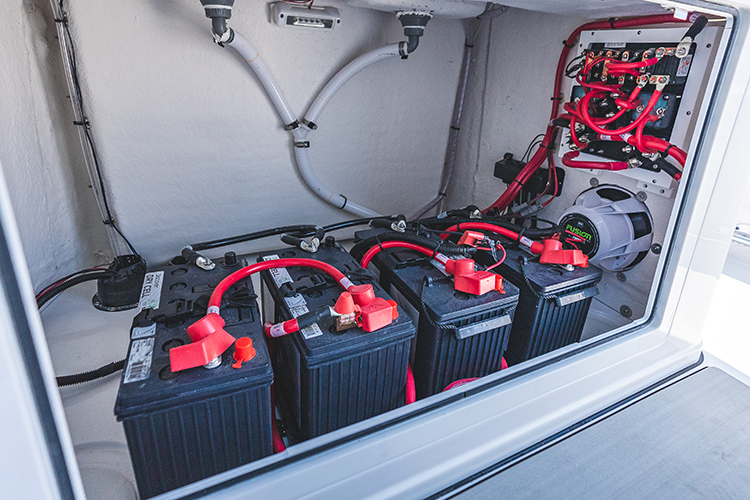
Marine battery maintenance in Florida’s climate is one of the most overlooked aspects of boat ownership — and one of the most critical. Florida’s combination of intense heat (average summer temperatures of 90°F+), extreme humidity, salt air, and offshore vibration means your marine batteries work harder and age faster than almost anywhere else in the country. Proper marine battery maintenance in Florida’s climate can double the lifespan of your batteries and prevent costly breakdowns offshore.
This guide covers everything Florida boaters need to know about marine battery maintenance, battery types, charging, and when to replace.
Marine electrical service and installation in South Florida
Marine Overhauling handles marine electrical work, from batteries and chargers to complete systems, with free quotes and a 5.0 rating on Google. Boat pickup and transport available for qualifying boats and projects.
Marine Battery Types for Florida Conditions
Flooded Lead-Acid (FLA) Marine Batteries
The traditional marine battery. Affordable and proven technology. Requires regular marine battery maintenance — checking electrolyte levels and adding distilled water. In Florida’s heat, water loss accelerates and FLA batteries need more frequent checks than in cooler climates.
AGM Marine Batteries
Sealed, maintenance-free, and significantly more vibration-resistant than FLA. AGM marine batteries handle Florida’s rough offshore chop better, charge faster, and have lower self-discharge rates. Popular on Florida fishing boats for their reduced maintenance requirements.
Lithium (LiFePO4) Marine Batteries
The premium choice for serious Florida boaters. Lithium marine batteries are 60% lighter, charge 3-4x faster, last 5-10x longer, and have superior thermal stability in Florida’s heat. The upfront cost is higher, but total cost of ownership over 10 years often favors lithium for Florida boaters.
How Florida’s Climate Damages Marine Batteries
Heat is the single biggest enemy of marine batteries. For every 15°F increase above 77°F, marine battery life is roughly cut in half. In a Florida boat stored without shade, bilge temperatures can reach 140-160°F in summer. A battery rated for 5 years in a temperate climate may last just 2-3 years in South Florida without proper marine battery maintenance.
Humidity and salt air attack terminals and connections, increasing resistance and generating heat. Offshore vibration can break internal plate welds in FLA marine batteries.
Essential Marine Battery Maintenance Practices for Florida
1. Keep Marine Battery Terminals Clean
Corroded terminals are one of the most common marine electrical failures in Florida. Clean terminals quarterly as part of your marine battery maintenance routine:
- Disconnect negative terminal first, then positive
- Mix 1 tablespoon baking soda in 1 cup water, apply and scrub
- Rinse with clean water and dry thoroughly
- Apply terminal protector spray before reconnecting
- Reconnect positive first, then negative
2. Check Electrolyte Levels (FLA Marine Batteries Only)
For flooded lead-acid marine batteries, check electrolyte levels monthly — more frequently in Florida summer heat. Use only distilled water — never tap water.
3. Use a Quality Smart Charger for Marine Battery Maintenance
A smart charger prevents overcharging — a serious risk in Florida’s heat. Recommended for Florida marine battery maintenance: NOCO Genius10 for 12V systems, ProMariner ProSport HD 20 for dual-bank systems. See: Shop Marine Battery Chargers →
4. Test Marine Battery Condition Annually
Florida’s heat makes annual load testing essential for proper marine battery maintenance. A battery showing 12.6V at rest can still fail under engine cranking load if it has been heat-damaged.
5. Inspect Marine Battery Cables and Connections
Inspect cables annually for cracked insulation, corrosion at ring terminals, and loose connections. Use marine-grade tinned copper cable for replacements — standard automotive cable corrodes faster in Florida’s salt air.
Lithium Marine Battery Maintenance Tips for Florida
- Use a lithium-compatible charger — standard FLA chargers can damage lithium marine batteries
- Avoid regular discharge below 20% capacity
- Ensure adequate ventilation or shade for battery compartment in Florida heat
- Partial charging is fine — no memory effect with LiFePO4 marine batteries
For more on marine electrical safety, see ABYC Marine Electrical Standards.
When to Replace Your Marine Battery in Florida
- Slow engine cranking even with fully charged marine battery
- Marine battery no longer holds charge
- Visible swelling or case damage — replace immediately
- More than 3 years old (FLA marine batteries in Florida conditions)
- More than 5 years old (AGM marine batteries in Florida conditions)
- Load test shows less than 75% capacity
Shop Marine Batteries at Marine Overhauling Pompano Beach
We carry a full range of marine batteries — starting, deep cycle, and dual-purpose — plus chargers and cables for proper marine battery maintenance in Florida’s climate. Visit our Pompano Beach store for expert advice. Need help with chargers, wiring or a house-bank upgrade? Our marine electrical installation service in Pompano Beach has you covered. See also: Best Marine Electronics for Saltwater Fishing in Florida.
Shop Marine Batteries and Chargers →
Address: 1831 NW 33rd St, Pompano Beach, FL 33064 | Phone: +1-786-277-2596