




Starlink & Marine Internet Guide: Satellite, Cellular & Routers

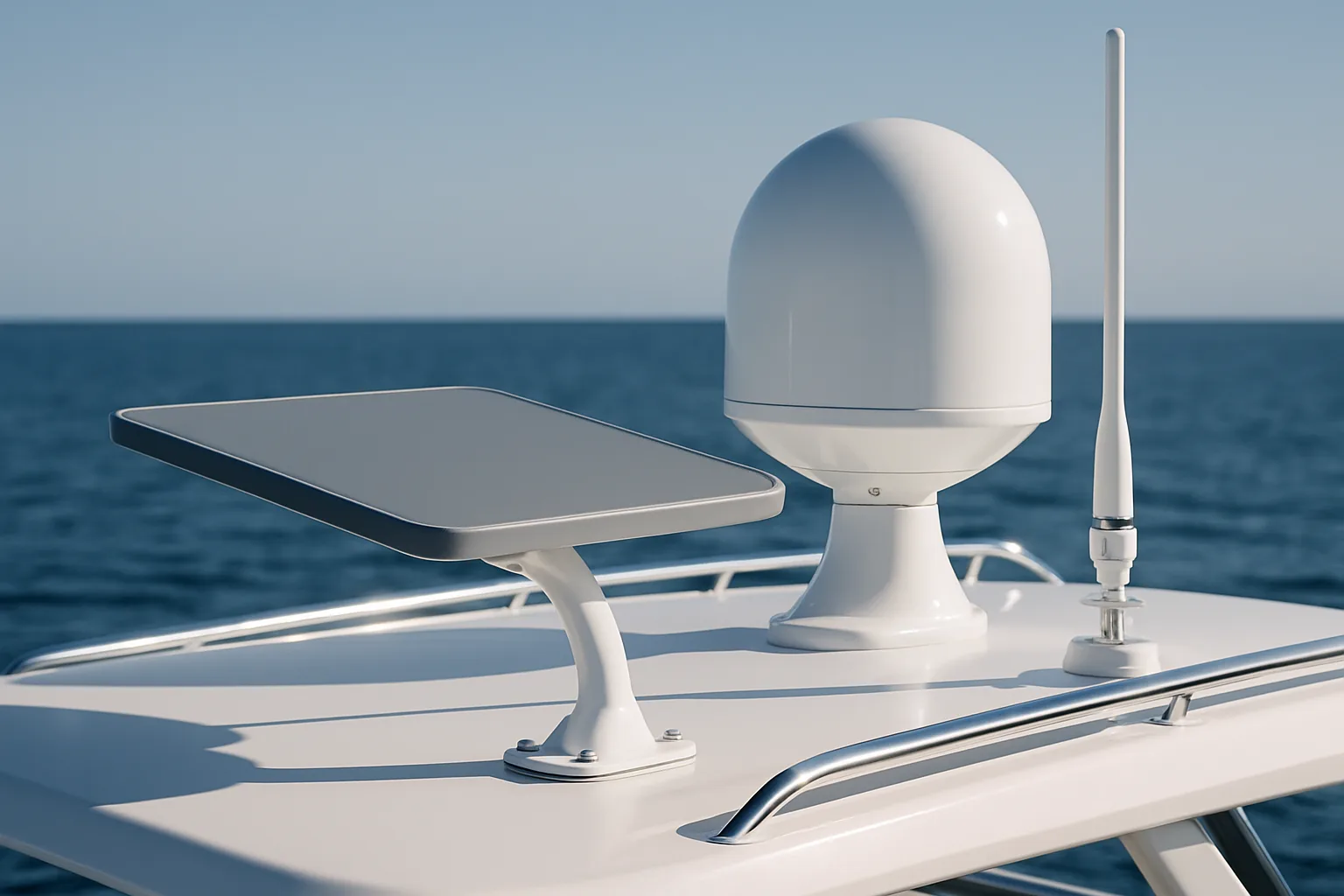
Reliable internet on a boat has gone from luxury to expectation — for weather routing, remote work, streaming and staying reachable. But no single technology covers every mile of water, so a good marine internet setup layers cellular, Wi-Fi and satellite and switches between them automatically. This guide explains each layer and how to tie them together.
Professional marine electronics installation in South Florida
Marine Overhauling sells the equipment and installs it, so one company stays responsible for the whole result. Free quotes, 5.0 rating on Google. Boat pickup and transport available for qualifying boats and projects.
The three layers of marine connectivity
Marina/shore Wi-Fi is free but weak and short-range. Cellular (LTE/5G) is fast and cheap within a few miles of shore. Satellite is the only thing that works truly offshore. The modern approach isn’t to pick one — it’s to install all three and let a marine router prioritize the cheapest available connection at any moment.
Satellite: Starlink changed the game
Low-earth-orbit satellite internet (Starlink) brought genuinely fast, low-latency connectivity to boats that previously relied on slow, expensive geostationary service. It needs a clear view of the sky and draws meaningful power, so plan the mount location and your satellite system power budget. A flat-mount or gimbaled dish on the hardtop or an unobstructed rail is typical; keep it clear of radar, antennas and the tower’s shadow.
Cellular: your everyday workhorse
Within cell range — which covers most coastal cruising — a marine LTE/5G setup is faster and far cheaper than satellite. An external marine cellular antenna dramatically improves signal over a phone’s internal antenna, and a router with a SIM slot shares that connection across all your devices. This is the layer most boaters use 90% of the time.
The marine router ties it together
The heart of the system is a marine router that accepts multiple sources — cellular SIM, Starlink, and marina Wi-Fi as a client — and automatically fails over to keep you online as conditions change. Good marine routers add a strong onboard Wi-Fi network, VPN support for remote work, and data-usage controls so you don’t burn through a satellite plan streaming video. Mount external antennas high and away from other electronics to avoid interference.
Power and mounting reality check
Always-on connectivity is a real electrical load, especially satellite. Budget the draw against your house battery bank and charging, and consider a switch or scheduler so the dish isn’t drawing power 24/7 at anchor. Mounting matters as much as the gear: a clear sky view for satellite, height for cellular and Wi-Fi, and clean, sealed cable runs below deck.
Choosing your setup
- Coastal / day boating: cellular + external antenna + router covers you cheaply.
- Cruising & liveaboard: add Starlink for offshore, let the router fail over.
- Remote work: prioritize a router with VPN, dual-SIM and solid failover.
Prefer a professional installation?
Marine Overhauling is a full-service marine shop in Pompano Beach, FL. Our technicians handle marine electronics installation on boats of every size — bench-tested, cleanly wired, and warrantied. Serving Fort Lauderdale, Miami and all of South Florida.
See our marine electronics installation → or call +1-786-277-2596.