




Marine VHF Radio Guide: DSC, AIS, Fixed vs Handheld

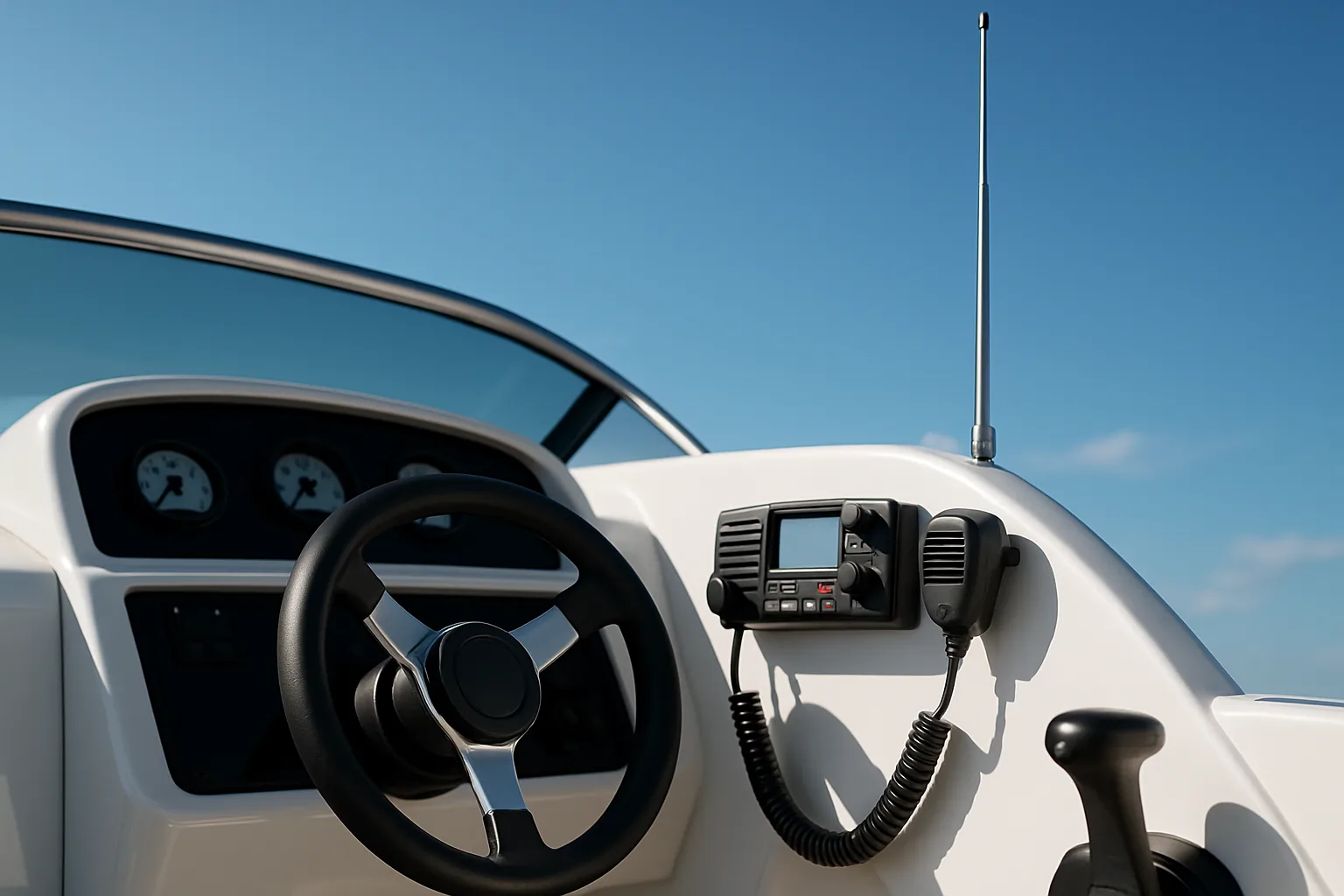
A marine VHF radio is the one piece of communication gear no boat should leave the dock without. It’s your line to the Coast Guard, to bridges and marinas, and to nearby vessels in an emergency — and unlike a cell phone, it works where there’s no signal and lets everyone in range hear a distress call. This guide covers fixed vs handheld, DSC, AIS and antennas so you can choose the right setup.
Professional marine electronics installation in South Florida
Marine Overhauling sells the equipment and installs it, so one company stays responsible for the whole result. Free quotes, 5.0 rating on Google. Boat pickup and transport available for qualifying boats and projects.
Fixed-mount vs handheld
A fixed-mount VHF radio runs on 25 watts, connects to a masthead or rail antenna, and gives you the longest range — the right primary radio for any boat you take offshore. A handheld VHF runs on ~5–6 watts, is battery-powered and floats (on better models), making it the ideal backup and the go-to for dinghies, kayaks and PFD pockets. Most serious boats carry both: fixed as primary, handheld as backup.
DSC — the button that calls for help
Every modern VHF has Digital Selective Calling. Press the guarded distress button and the radio transmits a digital mayday with your vessel’s identity — and, if connected to a GPS or chartplotter, your exact position — to every DSC radio and rescue station in range. To use it you must register for an MMSI number (free in the U.S. through BoatUS for recreational boaters) and program it into the radio. An unprogrammed DSC radio is a half-working safety device.
AIS — see and be seen
Many higher-end radios now include an AIS receiver, showing nearby commercial and AIS-equipped vessels as targets. Standalone AIS systems (receive-only or full transponders) integrate with your chartplotter for collision avoidance in traffic and poor visibility — a major safety upgrade for anyone running inlets or shipping channels.
The antenna makes or breaks your range
VHF is line-of-sight, so antenna height and quality matter as much as the radio. A taller, higher-gain VHF antenna mounted as high as practical dramatically extends range. Sailboats favor a low-gain masthead antenna (the height does the work and it tolerates heel); powerboats use a taller 6–8 dB antenna on a rail or hardtop. Use quality low-loss coax and marine-grade connectors — corroded or undersized cable quietly kills performance.
Beyond VHF: SSB and satellite
VHF range is limited to roughly line-of-sight (often 20–30 miles boat-to-shore). For true offshore and transoceanic passages, boats add HF/SSB radios or satellite communicators for long-haul contact. For coastal and near-shore boating, a good fixed VHF plus a handheld covers you.
Buying checklist
- Fixed 25W as primary, floating handheld as backup.
- DSC + registered MMSI, connected to GPS position.
- AIS receive if you run traffic or reduced visibility.
- Antenna height & gain matched to your boat, with good coax.
Prefer a professional installation?
Marine Overhauling is a full-service marine shop in Pompano Beach, FL. Our technicians handle marine electronics installation on boats of every size — bench-tested, cleanly wired, and warrantied. Serving Fort Lauderdale, Miami and all of South Florida.
See our marine electronics installation → or call +1-786-277-2596.
Ready to install? See whether a VHF and AIS install is a DIY job or one for a professional.