




How to Choose a Marine Chartplotter (Garmin, Raymarine & More)

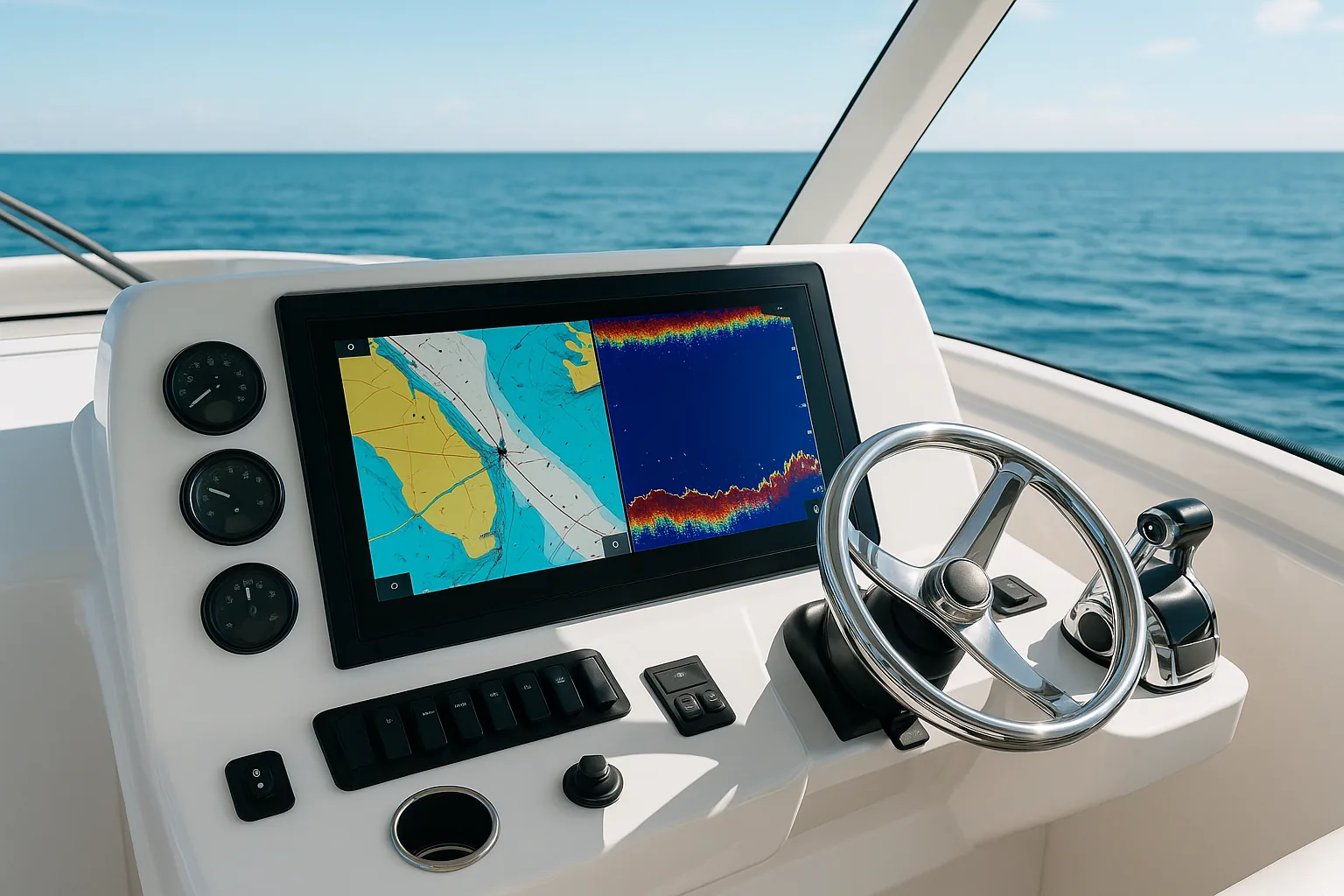
A chartplotter is the brain of your helm — GPS navigation, sonar, radar and engine data on one screen. With Garmin, Raymarine, Simrad and Lowrance all offering overlapping line-ups, here’s how to cut through the spec sheets and choose the right multifunction display (MFD) for your boat.
Professional marine electronics installation in South Florida
Marine Overhauling sells the equipment and installs it, so one company stays responsible for the whole result. Free quotes, 5.0 rating on Google. Boat pickup and transport available for qualifying boats and projects.
1. Screen size & resolution
Bigger screens are easier to read at a glance and split better into multiple panes (chart + sonar + radar). On a center console, 7″–9″ suits a single helm; 12″–16″ is ideal when you want full-screen sonar and charting side by side. Look for high-bright, IPS, sunlight-readable panels with a wide viewing angle.
2. Sonar / fishfinder type
This is where models really differ:
- CHIRP sonar — sweeps a range of frequencies for sharper target separation than traditional 2D sonar. The baseline you want today.
- DownVü / DownScan / ClearVü — photo-like image directly below the boat for structure.
- SideVü / SideScan — scans out to the sides; great for finding fish and structure over a wide area.
- Live sonar (Panoptix LiveScope, Active Imaging Live) — real-time moving sonar; the premium tier for serious anglers.
3. Charts & cartography
Check what’s preloaded (basemap vs detailed charts) and which cards it accepts — Navionics and C-MAP are the two big ecosystems, with features like high-res bathymetry, auto-routing and dock-to-dock guidance. Factor a chart card into your budget.
4. Networking & expandability
If you plan to add radar, autopilot, AIS, engine monitoring or extra displays, networking matters. NMEA 2000 ties sensors together; Ethernet shares radar and sonar between MFDs; NMEA 0183 handles legacy gear. Buy into a brand ecosystem you can grow with.
5. Touchscreen, GPS & the rest
Touchscreens are intuitive; keyed/hybrid units are easier in rough seas or with wet gloves. Confirm a fast multi-constellation GPS/GLONASS receiver, and check for built-in Wi‑Fi/Bluetooth for app control and chart updates.
Quick pick by boat
- Bay/center console: 7″–9″ CHIRP + DownVü/SideVü, Navionics or C-MAP.
- Offshore: 12″+ with radar & AIS over NMEA 2000/Ethernet.
- Serious angler: add live sonar (LiveScope / Active Imaging Live).
Shop & install
See our full range of chartplotters & MFDs and supporting marine electronics from Garmin, Raymarine and more. Want it wired and networked correctly the first time? Our Pompano Beach, FL shop does professional marine electronics installation — request a quote.