




Boat Bottom Paint Guide: Antifouling Types & How to Apply

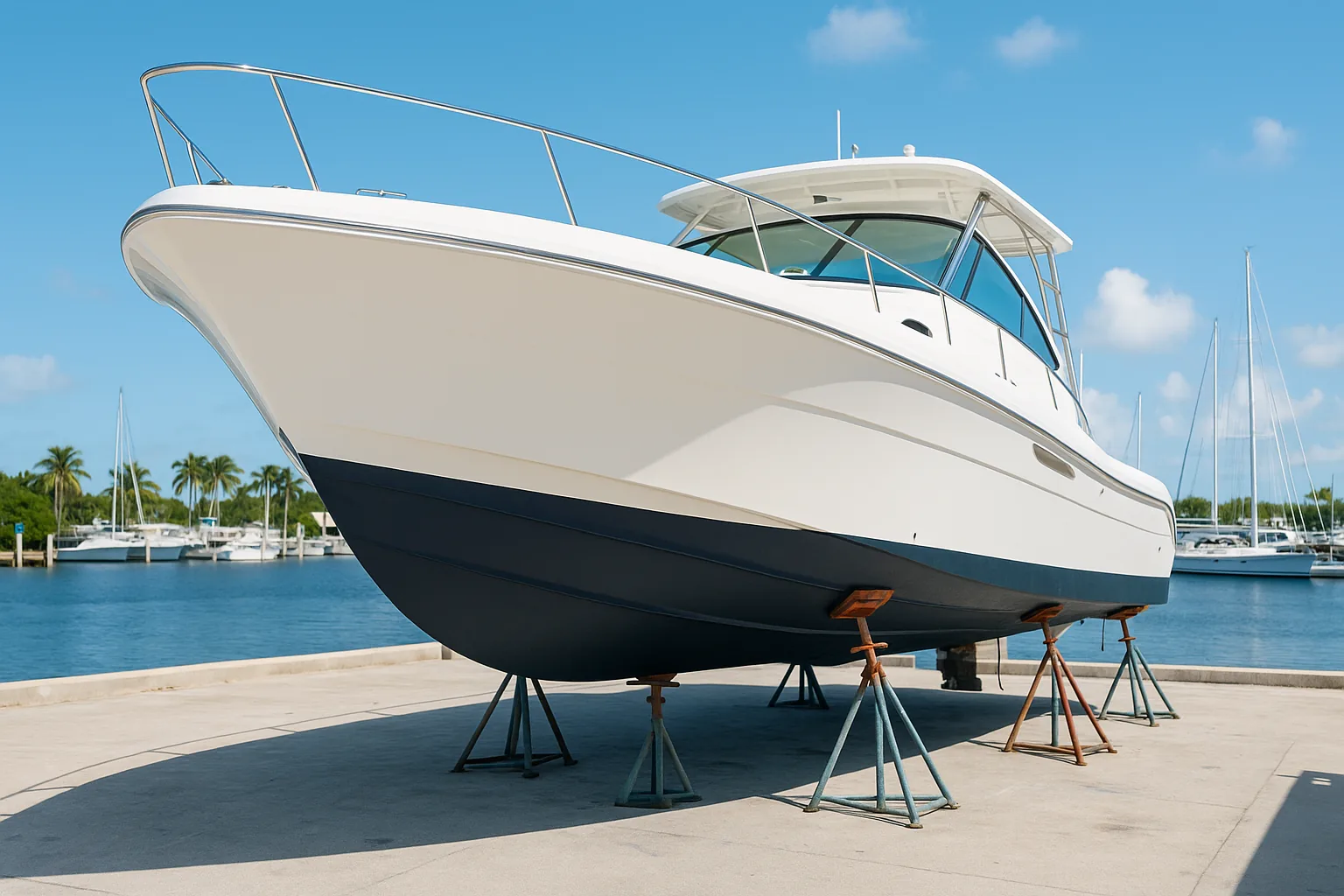
Antifouling (bottom) paint keeps barnacles, algae and slime off your hull — protecting performance, fuel economy and the underwater finish. Choosing the wrong type means wasted money and a fouled bottom by mid-season. Here’s how to pick and apply the right one.
Professional bottom painting in Pompano Beach, FL
Marine Overhauling does bottom paint jobs for boats across South Florida, with free quotes and a 5.0 rating on Google. Boat pickup and transport available for qualifying boats and projects.
Why bottom paint matters
Any boat left in the water grows marine fouling. Beyond the ugly slime, fouling adds drag — burning more fuel and cutting speed — and can damage gelcoat and running gear. Antifouling paint releases biocide slowly to keep the hull clean between haul-outs.
The main types
- Ablative (self-polishing): wears away gradually like a bar of soap, exposing fresh biocide. Great for boats that move, no heavy sanding before recoat, won’t build up. Best for most cruisers and trailered/seasonal boats.
- Hard / modified-epoxy: a tough film that stays put — ideal for fast boats and frequent scrubbing, but it loses potency over time and builds up coat-on-coat. Favored for high-speed and racing hulls.
- Hybrid (ablative + hard): balances durability with self-polishing — a flexible middle ground.
Copper vs copper-free & biocide
Copper-based paints are the proven workhorse for saltwater. Copper-free options exist for aluminum hulls and outdrives (copper + aluminum = galvanic corrosion) and where local regulations restrict copper. Match the biocide load to your fouling conditions — hot, nutrient-rich water like South Florida fouls fast and wants a stronger paint.
How to choose
- Always in the water? A quality ablative with a solid biocide load.
- Trailered or seasonal? Ablative tolerates haul-out/relaunch better than hard paint.
- Aluminum hull or outdrive? Copper-free, period.
- High-speed boat? Consider a hard/burnishable paint.
Application basics
- Haul, pressure-wash and let the hull dry.
- Sand/dewax and spot-prime bare gelcoat or repairs with the correct underwater primer.
- Apply 2 coats (an extra coat at the waterline and leading edges, which foul first).
- Respect the paint’s minimum/maximum launch window before splashing.
Shop or let us handle it
Browse boat bottom paint and underwater paints & primers. Prefer it done right with a proper haul-out? We apply bottom paint professionally at our yard in Pompano Beach, FL — get a bottom paint quote and we’ll prep, prime and coat your hull.