




Ablative vs. Hard Bottom Paint: How to Choose for Florida Boats

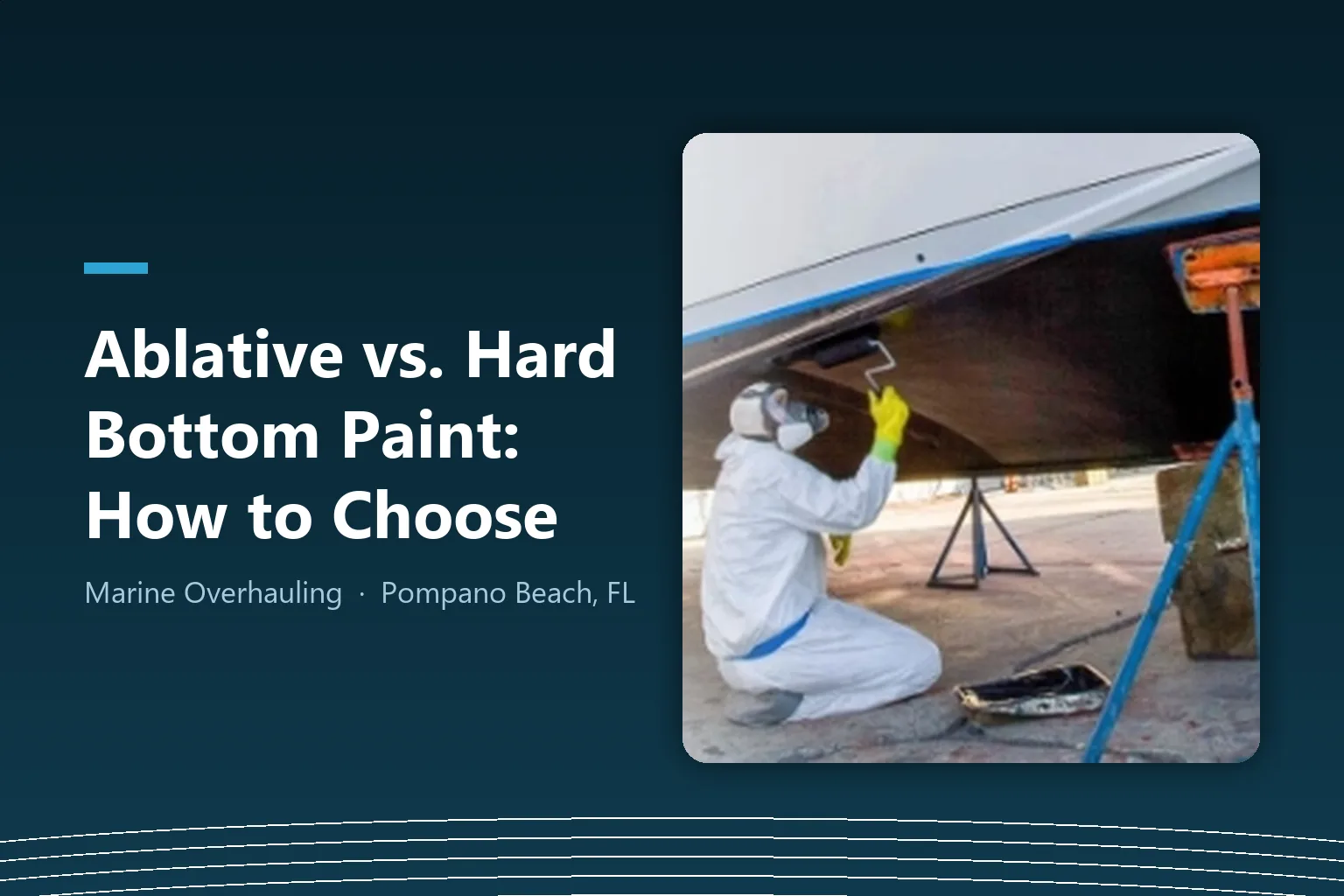
The short version: ablative bottom paint wears away in use, constantly exposing fresh biocide, which makes it the default choice for most Florida cruising boats that live in the water and move regularly. Hard bottom paint holds a solid film that stands up to speed and scrubbing, which suits performance boats, sportfish that get monthly diver cleanings, and hulls that are trailered dry. At Marine Overhauling in Pompano Beach, FL, we sell and apply both, and the right answer comes down to how your boat lives and how it gets cleaned, not which paint is “best” on a shelf.
Professional bottom painting in Pompano Beach, FL
Marine Overhauling does bottom paint jobs for boats across South Florida, with free quotes and a 5.0 rating on Google. Boat pickup and transport available for qualifying boats and projects.
How each type works
Ablative (self-polishing) paint is designed to erode slowly, like a bar of soap. As the boat moves through the water, spent paint sloughs off and a fresh, biocide-rich surface is exposed. Protection lasts as long as there is paint left, and there is no thick buildup of dead layers over the years.
Hard (contact leaching) paint cures to a tough, stable film. Biocide leaches out of the film until it is depleted, at which point the paint stops protecting even though it still looks fine. The film stays on the hull, so repeated repaints build up layers that eventually need stripping.
Where ablative wins
- Boats that are used regularly, since movement keeps the surface renewing itself.
- Owners who want no long-term paint buildup and easier future repaints.
- Multi-season protection in warm water when a quality copper or dual-biocide ablative is used.
- Boats that may sit on a trailer occasionally, since most modern ablatives tolerate drying out.
Where hard paint wins
- Fast powerboats and performance hulls, where an ablative would wear away too quickly at speed.
- Boats on a monthly diver-cleaning program, because the hard film tolerates scrubbing that would strip an ablative.
- Racing sailboats that burnish the bottom for smoothness.
The trade-offs: hard paint generally should not be hauled and stored dry for long periods once launched, since many formulas lose effectiveness after extended drying, and the accumulating layers mean a full strip is eventually part of the ownership cost.
The compatibility trap
You can usually apply ablative over sound hard paint, but hard paint over ablative is asking for trouble, since the moving ablative layer underneath gives the new film nothing stable to grip. Switching families often means sanding back to a sound base or stripping. Every major manufacturer publishes a compatibility chart, and checking it before buying paint is the cheapest hour you will spend on the whole job. If in doubt, bring us the history of your bottom and we will tell you what can go over what.
What we recommend in South Florida
Our water is warm all year, so fouling pressure is constant and biocide gets used up faster than the northern guidance suggests. For most moored cruising boats around Pompano Beach and Fort Lauderdale we steer owners to a quality ablative from the antifouling paints we carry, refreshed on a 12 to 18 month cycle. For sportfish and fast center consoles with a diver on schedule, hard paint earns its keep. Either way, pairing the paint with sensible hull cleaning is what actually delivers the lifespan printed on the can. For repaint timing, see how often to bottom paint in Florida, and for budgeting, the cost guide.
Not sure which side of the line your boat falls on? Our bottom paint service includes paint selection in the quote, free and with same-day response.
Frequently Asked Questions
Can I put ablative paint over hard bottom paint?
Usually yes, if the hard paint is sound, clean and lightly sanded. The reverse, hard over ablative, generally fails because the ablative layer underneath keeps wearing and the hard film loses its grip. Always check the manufacturer's compatibility chart.
Which bottom paint is better for a fast center console?
Hard paint usually suits fast powerboats better. Ablative paint wears away faster at high speed, so a hard film with regular diver cleaning tends to protect longer on performance hulls.
Is there bottom paint safe for aluminum hulls?
Yes, but it must be a copper-free formula. Copper-based antifouling causes galvanic corrosion on aluminum hulls and outdrives. Look for paints labeled safe for aluminum and follow the primer requirements.
How many coats of bottom paint do I need?
Most manufacturers call for two full coats, often with an extra coat at the waterline, leading edges and other high-wear areas. Follow the coverage and film thickness on the can, since thin paint is the most common reason antifouling underdelivers.