




How Often Should You Bottom Paint a Boat in Florida?

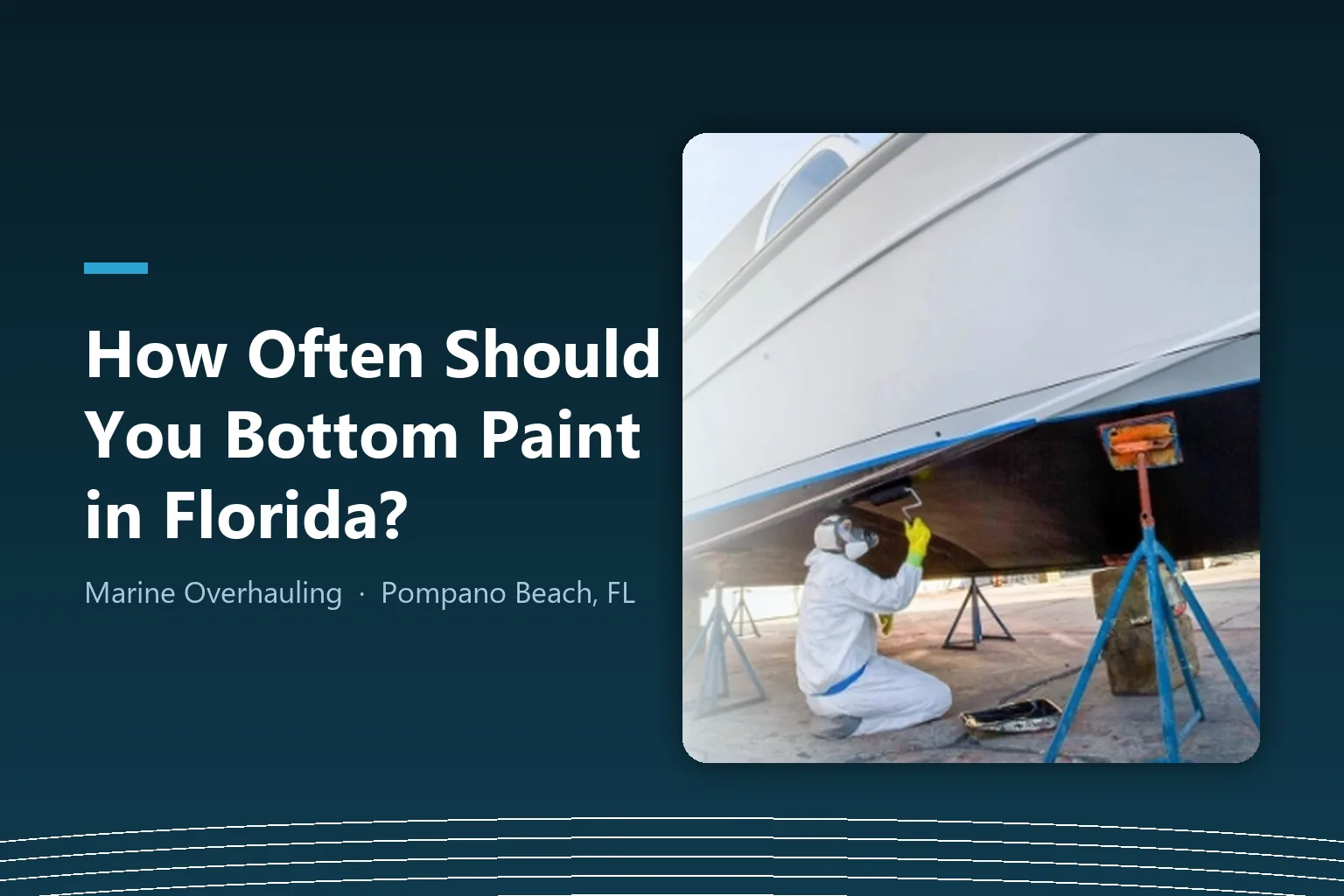
In Florida, most boats that live in the water need fresh bottom paint every 12 to 24 months. Ablative antifouling typically protects for 12 to 18 months in our year-round warm water, while hard paints can stretch closer to 24 months when the hull is cleaned regularly. Trailered boats that dry out between trips can go several seasons. At Marine Overhauling, a boatyard and marine parts store in Pompano Beach, FL, the boats we haul from local marinas and the Intracoastal usually come in on a roughly annual cycle, and that is the schedule we suggest most moored South Florida owners plan around.
Professional bottom painting in Pompano Beach, FL
Marine Overhauling does bottom paint jobs for boats across South Florida, with free quotes and a 5.0 rating on Google. Boat pickup and transport available for qualifying boats and projects.
Why Florida is harder on bottom paint
Antifouling paint works by slowly releasing biocide, and it releases faster when water is warm and growth is active. Up north, boats get a winter haul-out and the fouling season stops. In South Florida it never stops: water temperatures stay warm enough for barnacles, slime and weed to grow every month of the year. That is why the “2 to 3 years” figure you see quoted for northern boats is optimistic here, and why paint choice and cleaning routine matter more in Florida than almost anywhere else.
What changes the interval
Where the boat lives. A boat on a mooring or in a wet slip is fighting growth 24 hours a day. A trailer or lift boat that dries out after each trip may only need paint when the coating itself ages out.
Paint type. Ablative paints wear away and renew their surface, so protection ends when the paint is gone. Hard paints hold a thicker film, but once the biocide is depleted the paint stops working even though it still looks intact. Premium copper-loaded and dual-biocide formulas in our antifouling paint selection generally hold on longer in warm water than budget single-season paints.
How the boat is used. Regular use helps ablative paint refresh its surface. A boat that sits for months grows a beard no paint fully prevents.
Cleaning routine. Gentle, regular hull cleaning extends any paint’s life. Aggressive scrubbing does the opposite on ablatives, stripping paint along with the growth.
Signs your bottom paint is due
- Visible growth at the waterline or on the running gear soon after a cleaning.
- Lost speed or higher fuel burn at your usual cruise RPM.
- Paint that is flaking, chalking heavily, or showing gelcoat or old colors underneath.
- Your diver telling you there is nothing left to clean gently.
If two or more of these sound familiar, the paint has stopped doing its job and every extra month is costing you fuel and inviting blisters and staining.
How to stretch the interval
Pick the right paint for how you actually use the boat, keep a regular cleaning schedule instead of emergency scrubs, and deal with blisters or flaking early, while they are a prep item and not a full strip. When the boat is already hauled for paint, adding zincs, transducer antifouling and a hull inspection costs little and saves a separate haul-out later. For what the job itself costs in South Florida, see our guide on the cost to bottom paint a boat.
What we see in Pompano Beach
Our yard services boats from Pompano Beach, Fort Lauderdale, Boca Raton and along the Intracoastal. The pattern is consistent: moored boats painted with quality ablative come back at 12 to 18 months, hard-painted sportfish and performance hulls cleaned monthly by divers stretch toward two years, and neglected bottoms come in early with blisters and buildup that turn a repaint into a bigger job. If you are not sure where your boat sits in that range, our bottom paint service starts with a free quote and an honest look at what your hull actually needs.
Frequently Asked Questions
Can I just clean the hull instead of repainting?
Cleaning removes growth but does not restore biocide. Once antifouling is depleted, growth returns faster after every cleaning. Regular hull cleaning extends the life of good paint, but it cannot replace a repaint once the paint has worn out.
Do trailered boats in Florida need bottom paint at all?
Boats that come out of the water after every trip usually do not need antifouling. Bottom paint is for boats that stay in the water, on moorings, in wet slips or on the hook, where growth attaches within days in Florida's warm water.
Can new bottom paint go over the old paint?
Usually yes, if the old paint is sound and compatible with the new one. Flaking layers, heavy buildup or switching between incompatible paint families can require sanding or a full strip first. A yard will check compatibility before quoting.
How long does a bottom paint job take?
A straightforward repaint typically takes a few days including haul-out, prep, application and curing time. Heavy prep work, blister repair or a full strip adds time. Your yard should give you a schedule with the quote.