




Marine Radar Buying Guide: Dome vs Open Array & Doppler

Marine radar is your eyes in fog, rain and darkness — spotting other vessels, land, channel markers and even bird flocks and squall lines long before you can see them. Here’s how to choose the right radar for your boat.
Professional marine electronics installation in South Florida
Marine Overhauling sells the equipment and installs it, so one company stays responsible for the whole result. Free quotes, 5.0 rating on Google. Boat pickup and transport available for qualifying boats and projects.
Dome (radome) vs open array
- Radome (dome): enclosed, compact and affordable. Ideal for sail and smaller power boats. Beam is a little wider, so target separation at distance is slightly softer.
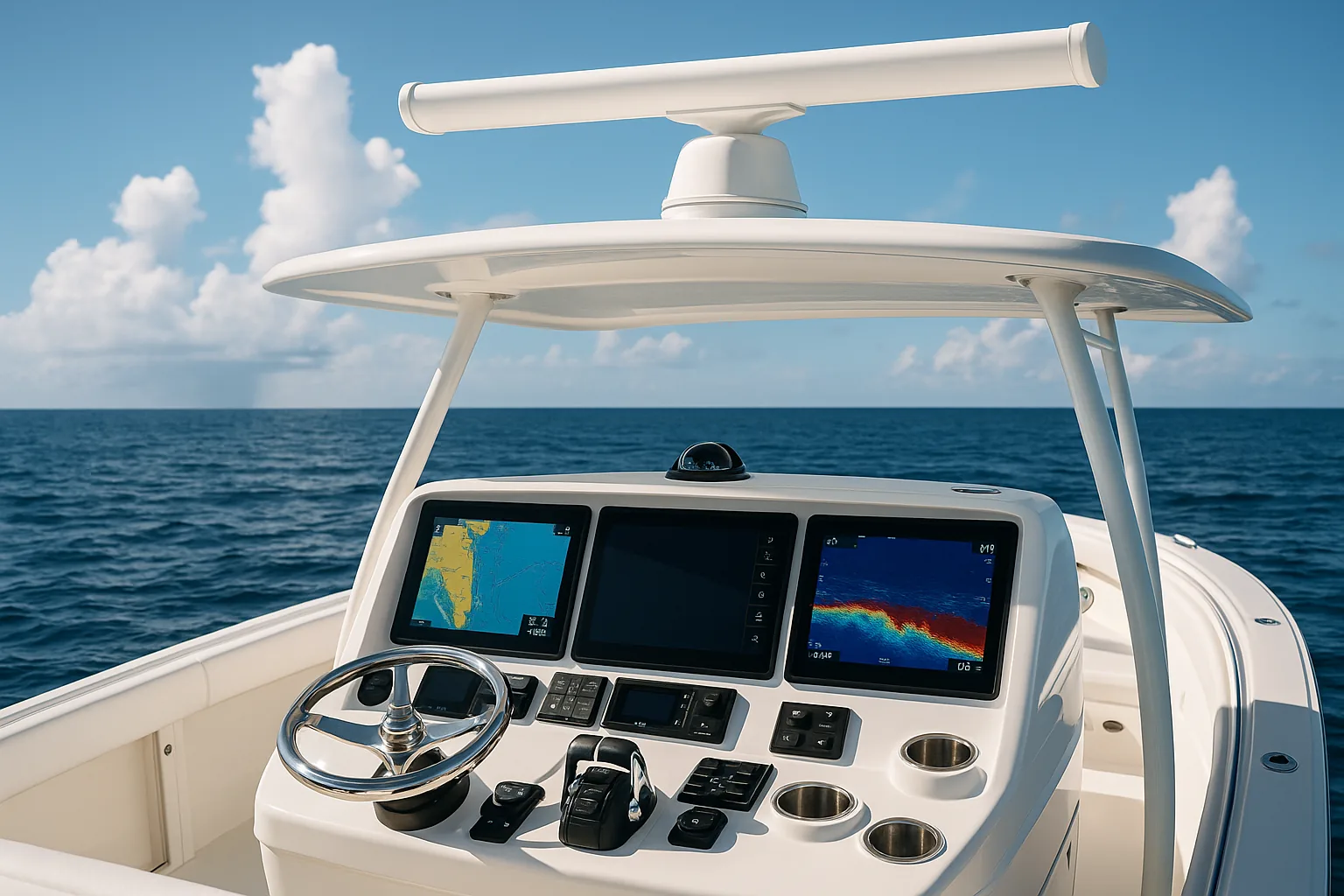
- Open array: a spinning antenna (3–6 ft). Tighter beam = better target separation and longer effective range — the choice for larger offshore boats.
Pulse vs solid-state (broadband/CHIRP)
Traditional magnetron pulse radars are proven and reach long ranges. Modern solid-state (broadband / CHIRP pulse-compression) radars warm up instantly, sip power, show superb close-range detail (great for tight harbors) and emit far less radiation.
Doppler target tracking
Newer radars add Doppler processing that automatically color-codes targets moving toward you — instant collision-risk awareness without manually acquiring each target. Combined with MARPA/target tracking, it’s a major safety upgrade.
Range, power & what’s realistic
Rated range is line-of-sight; real-world range depends on antenna height and target size. For most boaters, mid-range detail and reliable 8–24 NM coverage matter more than headline numbers.
Integration
Most radars overlay onto your chartplotter via the brand’s network (Garmin, Raymarine, Simrad, Furuno). Stay within one ecosystem so radar, MFD and autopilot talk to each other over NMEA 2000/Ethernet.
Shop & install
Browse our marine radars and electronics. Radar mounting and networking is best done right — our Pompano Beach, FL team handles professional installation — get a quote.