




Marine Air Conditioner Maintenance: A Simple Checklist for Florida Boats

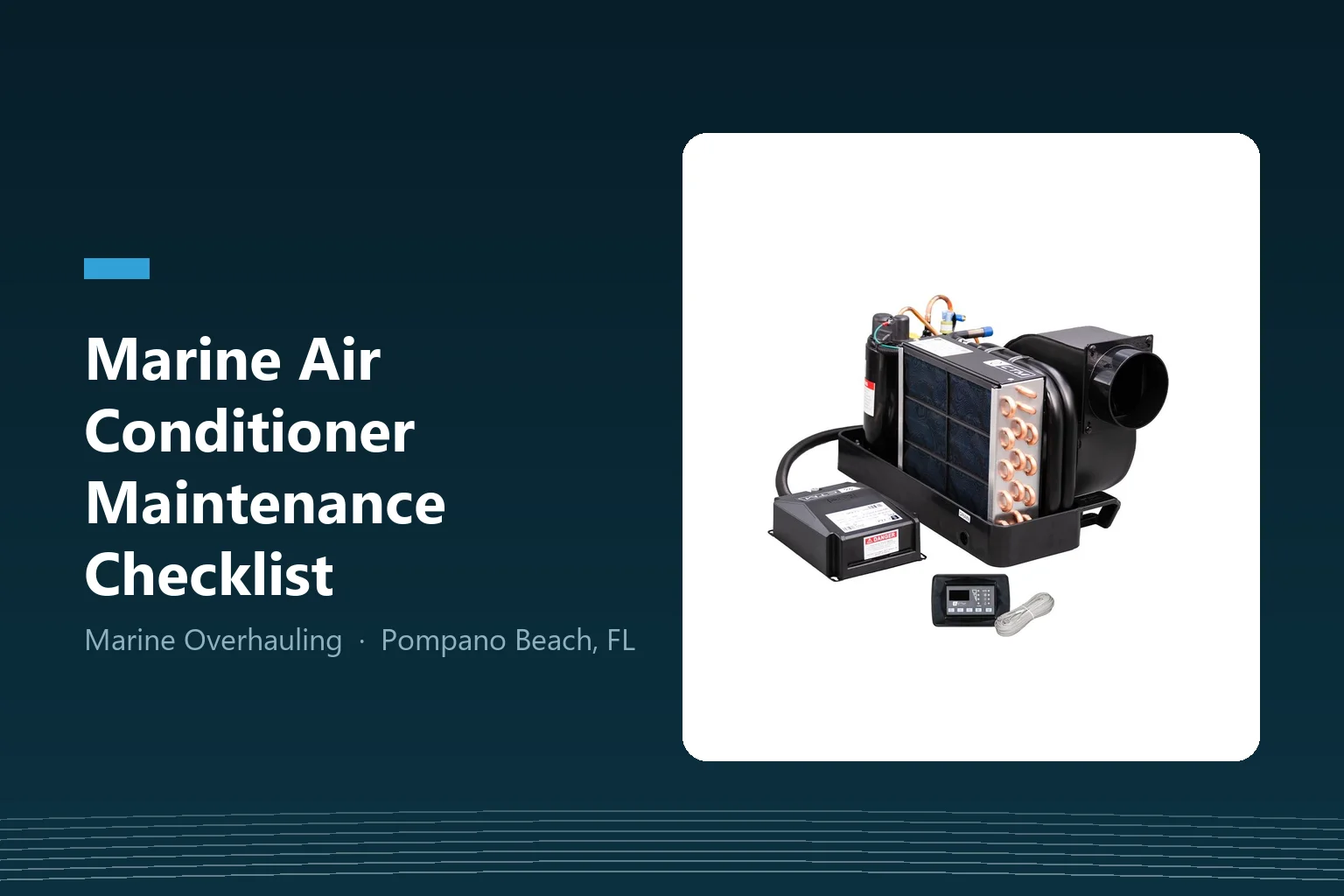
In South Florida a boat’s air conditioner runs most of the year, often around the clock at the dock. Most of the service calls we get for marine air conditioning start with the same few things: a strainer full of sea grass, a filter nobody has looked at in months, or a condenser coil lined with scale. None of them needs a technician to prevent. This checklist covers what to check, how often, and when it is time to call for help. It applies to self-contained units from any brand, including CTM, Dometic, Cruisair, Marine Air and Velair.
How a marine air conditioner stays healthy
A self-contained marine unit has two sides. Cabin air is pulled through a return filter, cooled over the evaporator coil and pushed back out through the ducting. The heat it removes goes into seawater: a pump draws water through a thru-hull and strainer, sends it through the condenser coil and out an overboard discharge. Almost every problem that owners can prevent is a restriction on one of those two paths. Keep the air moving and the water moving, and the unit has what it needs.
Every few weeks during heavy use
- Look at the overboard discharge. With the unit running, you should see a steady stream leaving the hull. A dribble or an intermittent spurt means the seawater side is restricted, and it is the earliest warning you will get.
- Clean the seawater strainer. Close the seacock first, open the strainer, remove grass, shells and debris, check the basket and the lid gasket, then reassemble and reopen the seacock before starting the unit. In warm Florida water marine growth builds up fast, so this is the single most useful habit.
- Check the return air filter. Pull it and hold it up to a light. If you cannot see light through it, clean or replace it. A clogged filter starves the evaporator of air, which is what makes a coil ice up and the vents blow weak.
- Make sure condensate drains. The unit removes a lot of water from humid cabin air. Check that the drain pan empties and the drain line is not kinked or blocked, or the water ends up in the bilge or under the cabin sole.
Once a season
- Flush the condenser coil. Over time scale and marine growth coat the inside of the seawater coil and cut its ability to shed heat. The usual fix is to circulate a descaling solution through the seawater loop and flush it with fresh water afterwards. Follow the instructions of the unit’s manufacturer and of the product you use, and never run the air conditioner while the solution is in the loop.
- Inspect hoses and clamps. Look for cracked hose, weeping connections and corroded clamps on the seawater side, especially at the pump and at the thru-hull.
- Check the thru-hull when the boat is hauled. A thru-hull or scoop overgrown with barnacles restricts flow no matter how clean the strainer is. Haul-out for bottom paint is the right moment to clear it.
- Clean around the evaporator and blower. Dust and lint on the evaporator fins and the blower wheel reduce airflow the same way a dirty filter does.
- Walk the ducting. A crushed, kinked or disconnected duct behind a panel sends cold air into a locker instead of the cabin.
Electrical checks that prevent nuisance trips
Marine air conditioners are sensitive to low voltage, and a long dock cord on a busy marina afternoon can pull the voltage down far enough to trip the unit or make the compressor struggle. The acceptable range is printed on the data plate of every unit. Dometic, for example, lists its lower voltage GT units as running on 100 to 120 volts. If trips happen mainly at the dock and not on the generator, check the voltage at your panel while the unit starts.
Inverter units such as the Velair VSD line ramp the compressor up gradually, which Velair says avoids the start-up spike and helps on weak shore power. If your boat fights low voltage every summer, that is worth considering at replacement time. Our CTM vs Dometic vs Velair comparison explains the difference.
Reverse cycle heat and winterizing
Most self-contained units are reverse cycle, which means the same system heats by moving heat out of the seawater and into the cabin. It works well in mild water and less well as the water gets very cold, so it is a comfort heater, not a replacement for a dedicated heating system in winter climates.
Boats that stay in South Florida usually keep the air conditioner in service all year. Boats that are laid up where water can freeze need the seawater side protected: close the seacock and either drain the loop or fill it with non-toxic marine antifreeze, following the unit manual. Water left standing in the condenser coil and pump can freeze and split them.
Parts worth keeping on board
- A spare return air filter sized to your unit. CTM filters come in 6,000 BTU, 6,000 to 8,000 BTU, 10,000 to 12,000 BTU, 16,000 BTU and 24,000 to 25,000 BTU sizes. They are made for CTM units and may fit other brands if the dimensions match, so measure yours first.
- A run capacitor for your unit’s size and voltage, the most common electrical failure on a marine air conditioner, from the CTM parts range.
- Knowing your seawater pump. Write down the model and voltage. If it ever fails, our marine air conditioner pump guide shows how to size a replacement.
When to stop and call a technician
Maintenance covers airflow, water flow and cleanliness. It does not cover the sealed refrigerant circuit. Call for service when the unit keeps shutting down on high pressure even though the discharge stream is strong and the strainer is clean, when the compressor hums and clicks off, when the coil keeps icing with a clean filter, or when the unit cools but will not heat. Our CTM A/C troubleshooting guide matches each of those symptoms to the part that usually causes it, and refrigerant work is always a job for a certified technician.
How often should I clean my boat air conditioner filter?
Check it every few weeks when the unit runs daily, as it does most of the year in Florida. Hold it up to a light: if you cannot see light through it, clean or replace it. A clogged filter is one of the most common reasons a marine air conditioner blows weak air or ices up.
Why is my boat air conditioner blowing warm air?
Start with the seawater side. If the overboard discharge is weak or intermittent, clean the strainer, confirm the seacock is open and check the thru-hull for growth. A marine unit that cannot get enough seawater cannot get rid of its heat and will blow warm air or shut down on high pressure.
Do I need to winterize my boat air conditioner in Florida?
Boats that stay in South Florida usually keep the air conditioner in service all year and do not winterize it. Boats laid up where the water can freeze need the seawater loop drained or filled with non-toxic marine antifreeze, following the unit manual, so the condenser coil and pump do not freeze.
How do I flush a marine air conditioner condenser?
Circulate a descaling solution through the seawater loop with the unit off, then flush the loop thoroughly with fresh water before running it again. Follow the instructions of your unit’s manufacturer and of the descaler you use. Once a season is a common interval for boats that run their air conditioning heavily.
Boat air conditioner repair in South Florida
If the checklist does not bring the cold back, we diagnose and repair marine air conditioning in Pompano Beach and across South Florida, from pumps and capacitors to complete unit replacement. See our marine air conditioning service or call (786) 277-2596 for a quote. Replacing the whole unit? Size it with our BTU sizing guide and browse self-contained marine air conditioners.